
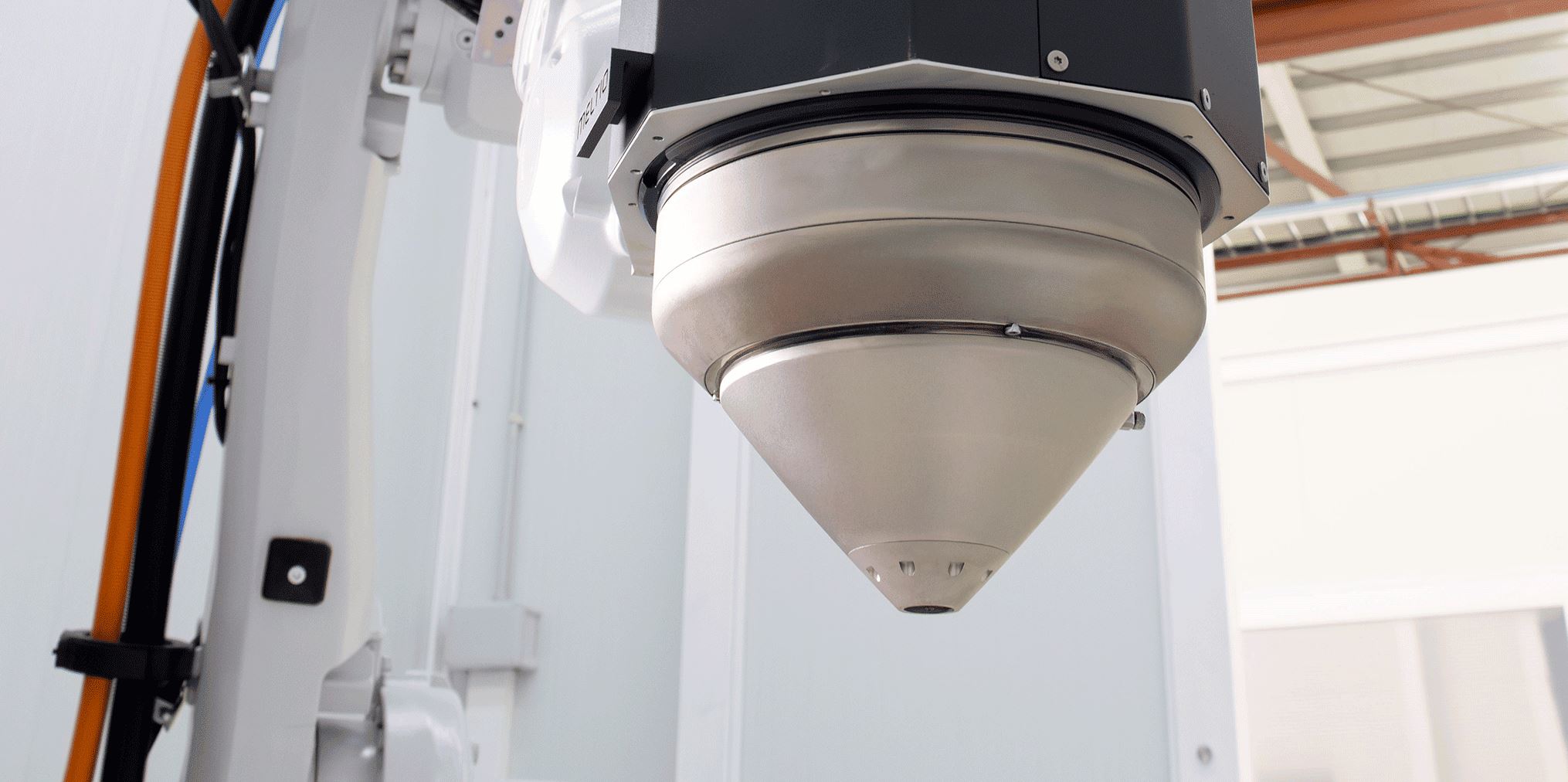
Wire Laser DED print head on industrial robot arm

Systems for Industrial Metal 3D Printing

Here you will find metal 3D printing systems from registered manufacturers. Find out about technologies, material feed, integration options and typical application areas. The system overview only shows offers from manufacturers who are registered on Welding3D and have published their own systems.
4 systems found
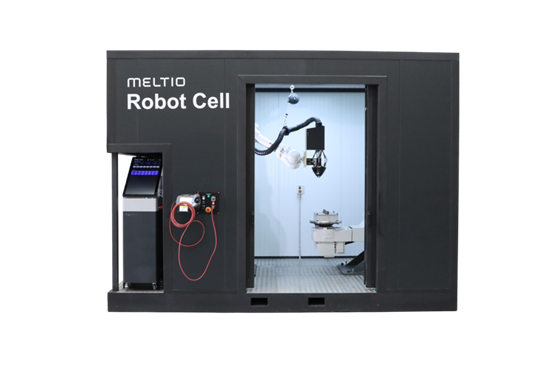
Meltio Robot Cell

Meltio Robot Cell

The Meltio Robot Cell is a compact, fully enclosed manufacturing cell for industrial metal 3D printing with wire and laser. It combines a 6-axis industrial robot with a 2-axis positioner, thereby enabling the additive manufacturing of complex metal components …
Price on request
Details & Enquiry
Parameter Specification
Manufacturer Meltio
Model Robot Cell
technology Wire Laser Metal 3D Printing (DED)
robot 6-axis ABB robot + 2-axis positioner
Axes total 8
Installation space Ø 1,000 × 1,200 mm
Max. workpiece weight 500kg
Laser power 1,200W
Wire diameter 0.8-1.2mm
Materials Steel, stainless steel, titanium, nickel alloys
Cell size approx. 4,050 × 2,300 × 3,000 mm
Weight approx. 4,000 kg
Power supply 400 V three-phase current
Power consumption max. 20 kW / Ø approx. 7 kW
Protective gas Argon, 2-5 bar
Security Closed laser class 1 cell
Meltio M600

Meltio M600

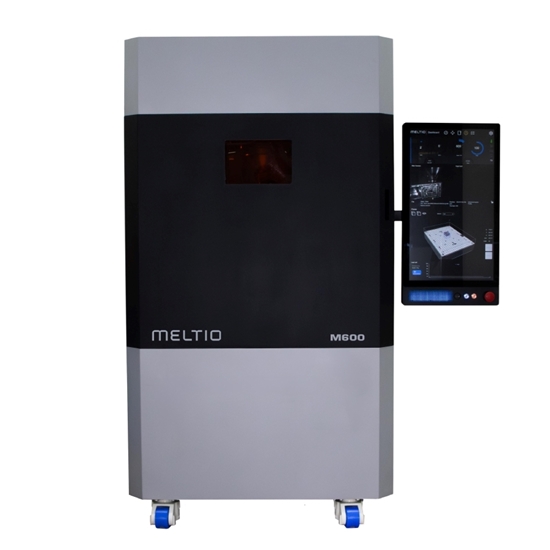
The Meltio M600 is an industrial metal 3D printer for the precise production, repair and further development of metal components. The system works with wire laser technology: commercially available welding wire is melted by nine blue diode lasers and built up …
Price on request
Details & Enquiry
Parameter Specification
Manufacturer Meltio
Model M600
technology Wire Laser Metal 3D Printing (LMD/DED)
Axles 3 servo-electric linear axes
Installation space 300 × 400 × 600mm
Laser 9 blue direct diode lasers
Laser power 1,000W
Laser wavelength 450 nm
Wire diameter 0.8-1.2mm
Materials Steel, stainless steel, titanium, nickel, copper and aluminum alloys
Machine dimensions approx. 1,050 × 1,050 × 1,950 mm
Machine weight approx. 800-1,000 kg
Power supply 400 V three-phase current
Power consumption approx. 4–6 kW, depending on the equipment
cooling Integrated water-cooled chiller
Process monitoring Closed loop control for laser and wire
Measuring system Integrated automatic XYZ button
Interfaces USB and Ethernet
Meltio Engine Robot Integration

Meltio Engine Robot Integration

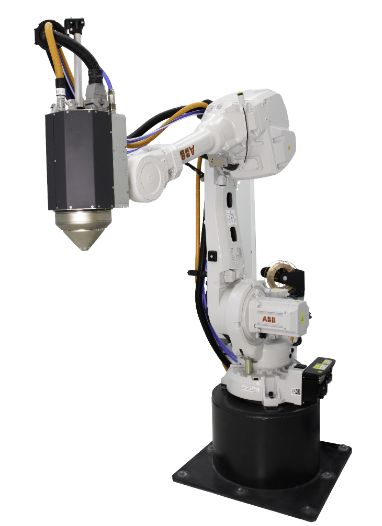
The Meltio Engine Robot Integration expands an industrial robot into a flexible system for wire laser metal 3D printing. The compact, robot-guided print head works with nine blue diode lasers and processes standard welding wire with a diameter of 0.8 to 1.2 mm…
Price on request
Details & Enquiry
Parameter Specification
Manufacturer Meltio
Model Engine Robot Integration
technology Wire Laser Metal 3D Printing (DED/LMD)
System type Integration kit for industrial robots
Laser 9 blue direct diode lasers, 450 nm
Laser power 1,000W
Installation space Depending on the reach and axis system of the robot
Printhead weight approx. 20.5-23kg
Recommended robot payload 45-60kg
Wire diameter 0.8-1.2mm
Wire feed Single wire or dual wire possible
Materials Steel, stainless steel, tool steel, titanium, nickel, copper and gold alloys
Process monitoring Melt pool camera and closed-loop wire control
cooling Water-cooled print head, chiller included
Power supply 200/240 V or 380/415 V three-phase current
Power consumption max. 9.2 kW, average approx. 2-5 kW
Protective gas Argon or nitrogen, 4-6 bar
software Meltio Space, 1 year included
Compatible robots ABB, KUKA, FANUC, Yaskawa and Siemens controls
Meltio Engine CNC integration

Meltio Engine CNC integration

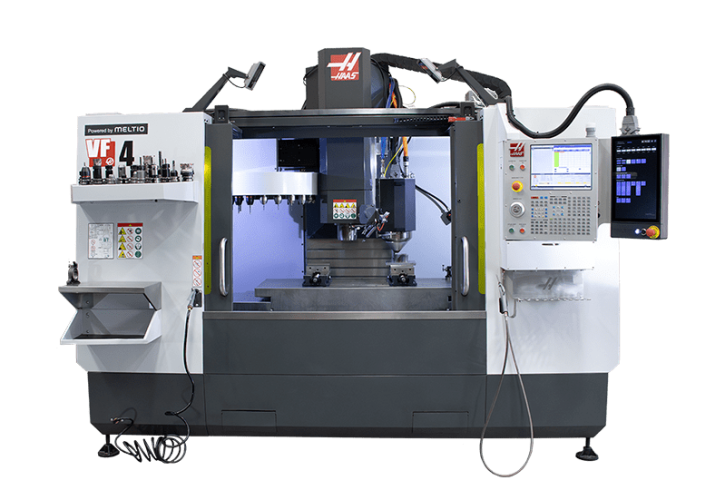
Meltio Engine CNC Integration adds industrial wire laser metal 3D printing to a CNC machining center. The print head mounted on the side of the spindle applies metal specifically to the component using welding wire and a blue laser. The CNC machine can then pr…

Price on request
Details & Enquiry
Parameter Specification
Manufacturer Meltio
Model Engine CNC integration
technology Wire laser metal 3D printing / hybrid manufacturing
Mission Integration into vertical CNC machining centers
Laser 9 blue direct diode lasers, 450 nm
Laser power 1,000W
Printhead Mounted on the side of the spindle
Printhead weight Mounted on the side of the spindle
Printhead weight approx. 32.5-35kg
Printhead size retracted 280 × 332 × 684mm
Printhead size extended 280 x 332 x 943mm
Installation space Depending on the travel path of the CNC machine
Wire diameter 0.8-1.2mm
Wire feed Single wire or dual wire
Materials Steel, stainless steel, tool steel, titanium, nickel and copper alloys
Process monitoring Melt pool camera and closed-loop wire control
cooling Water-cooled printhead, chiller included
Power supply 200/240 V or 380/415 V three-phase current
Power consumption max. 9.2 kW / average approx. 2-5 kW
Control unit 80.5kg, air cooled, 17" HMI
CNC requirement Recommended repeatability: ± 0.06 mm
Layer height approx. 0.4-1.2mm

Frequently Asked Questions

Practical advice on choosing the right industrial metal 3D printing system.

1. Wire or Powder: Which feedstock is better?

Wire is generally cheaper, cleaner to handle, and safer since there is no risk of powder explosions or inhalation. Powder, however, allows for much finer resolution and the creation of novel alloy mixtures during printing.

2. Can all systems repair existing parts?

No. Only Directed Energy Deposition (DED) and WAAM systems can build onto existing, curved surfaces. Powder Bed (PBF) systems always start on a flat build plate and cannot be used for repairs.

3. How important is the build volume?

Extremely important, but be careful: A large build chamber requires a massive amount of powder to fill, which ties up capital. For giant parts (meters in size), robot-based WAAM is usually the only economically viable option.

Find the Right Metal 3D Printing System for Your Application

Not sure which technology or system fits your application best? Welding3D helps you structure your requirements and forwards them to suitable registered manufacturers across all metal AM process families.

This content was created in whole or in part with the assistance of artificial intelligence.