
Moisture as the Invisible Enemy in the Powder Bed
Metal powders used for additive manufacturing have an enormous specific surface area. This means they act hygroscopically—they inevitably draw moisture from the ambient air. This is particularly critical with reactive materials like aluminum alloys (AlSi10Mg). Leaving a powder container open on a humid summer day can be enough to irreparably damage powder quality.
When damp powder is melted in the Laser Powder Bed Fusion (PBF-LB/M) process, the water (H2O) bound to the powder surface dissociates into oxygen and hydrogen at extreme temperatures. While the oxygen leads to oxide inclusions, the hydrogen dissolves excellently into the liquid aluminum melt. However, as the melt pool cools rapidly, the solubility for hydrogen drops drastically. The gas cannot escape quickly enough and remains trapped within the part in the form of fine, spherical pores (hydrogen porosity).
Consequences and Preventive Measures
The consequences of massive hydrogen porosity are severe: a drastic drop in tensile strength and, most importantly, ductility. The component often breaks unpredictably.
How to store powder correctly:
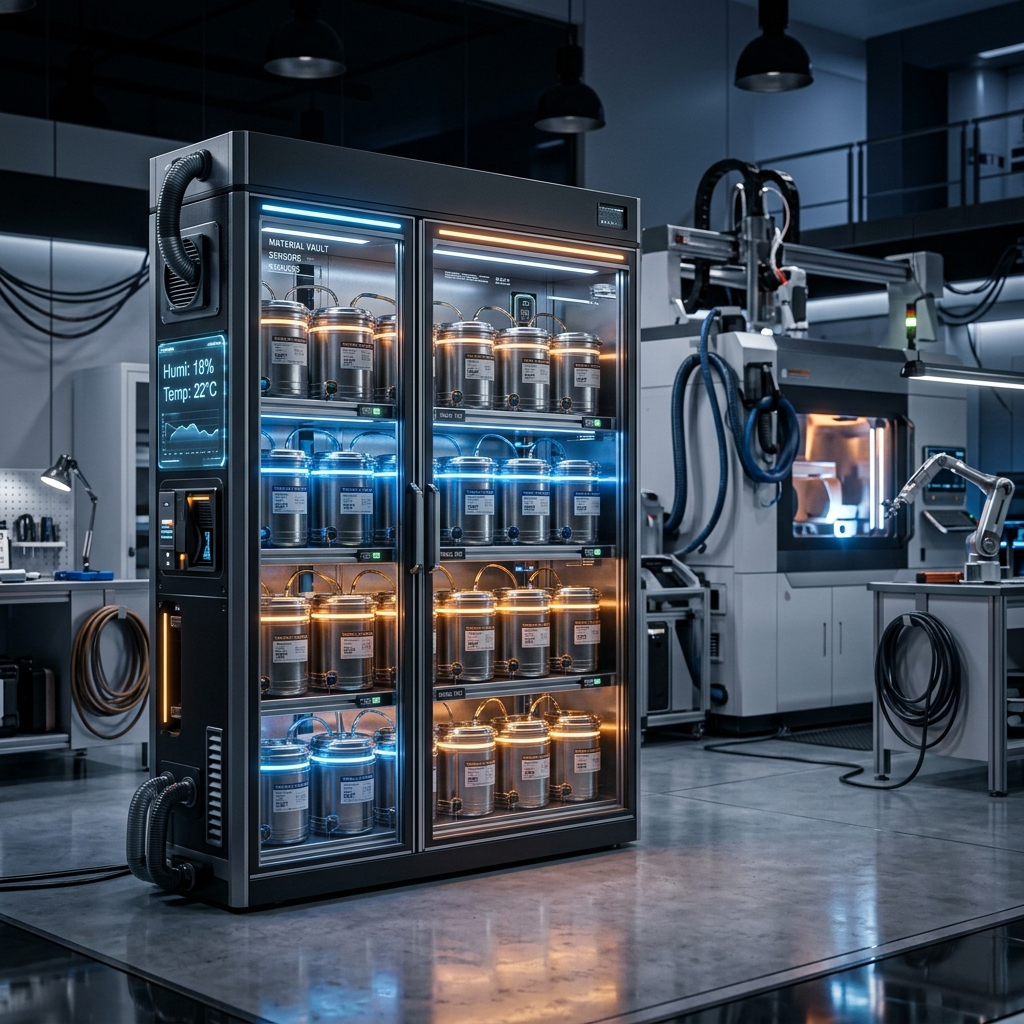
- Conditioned Storage: Metal powders should always be stored in dedicated dry cabinets at under 5% relative humidity or directly in argon-flooded containers.
- Vacuum Packaging: Newly acquired powder should remain in its original vacuum packaging until immediately before use.
- Powder Drying: If the powder has already absorbed moisture, it can be gently "baked out" in special vacuum drying ovens (often at 60–80°C under vacuum). Checking residual moisture should be mandatory before starting a print run.
Only strictly controlled powder handling guarantees reproducible and pore-free printed components of industrial quality.
No comments yet. Be the first to reply!