The Invisible Enemy: Particle Mixing
In industrial environments where different metal powders are processed on the same PBF-LB/M machines (e.g., 316L stainless steel and Ti6Al4V), cross-contamination is a pervasive risk. Even the slightest traces of foreign material can locally alter the alloy composition, form unwanted intermetallic phases, and initiate micro-cracks in the part.
The introduction of reactive materials like titanium into nickel-based alloys or aluminum is particularly critical, as it compromises the melting behavior and the certification of the entire component batch.
Strategies for Safe Material Separation
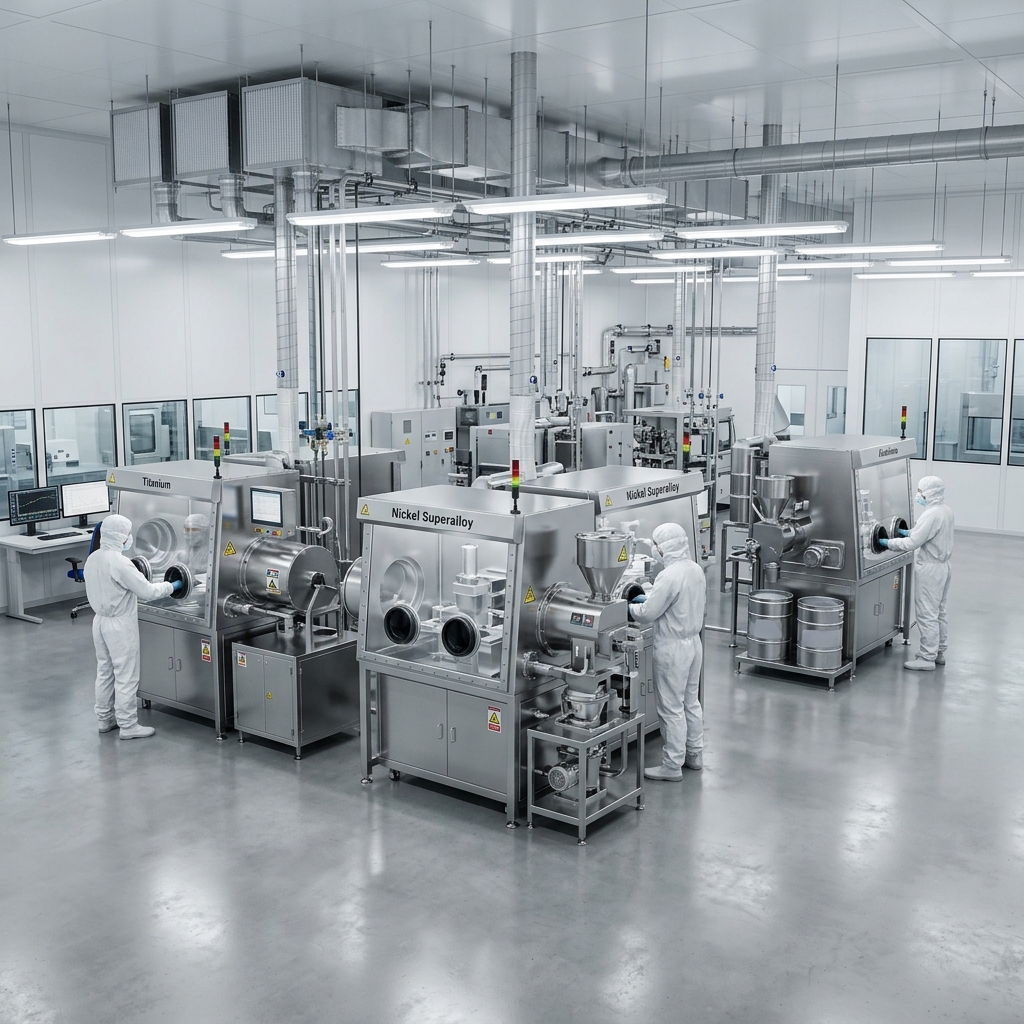
The best solution for serial production is the dedicated assignment of a machine to only one material class (e.g., "Aluminum-only machines"). If this is not possible in R&D departments or at service bureaus, strict protocols must be established:
- The Complete Cleaning Cycle: A material changeover requires meticulous cleaning. First, all loose powder is vacuumed. Then filter housings must be swapped, recoater lips replaced, and seals wiped down wet. The machine often must be entirely wiped out with a soft cloth and isopropanol until no gray haze remains on the cloth.
- Exchangeable Build and Powder Modules: Modern printing systems offer swappable build cylinders and powder dosers. The contaminated sub-assemblies can be completely removed and cleaned externally in an enclosed depowdering station, while the machine immediately resumes operation with the new material setup.
- Dedicated Equipment: It is mandatory to have a separate set of protective clothing (gloves), vacuum cleaners (especially ATEX-certified wet vacuums), and sieving stations for each material. Never use the same sieve for steel and titanium.
Conclusion: A material changeover often takes 8 to 16 labor hours and must never be rushed. Micrometer-scale cleanliness is the supreme rule in metal 3D printing.
No comments yet. Be the first to reply!