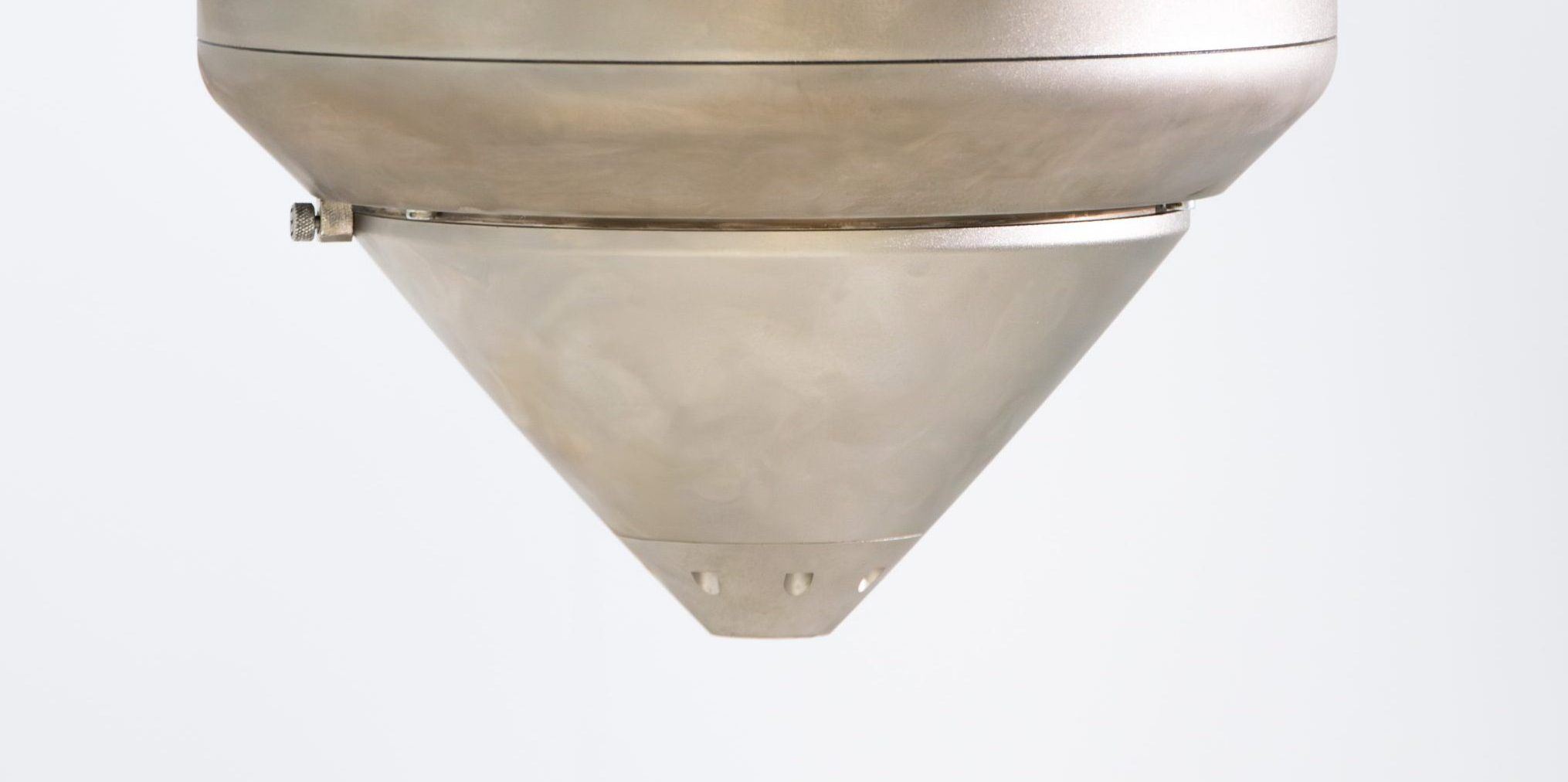
Close-up of metal 3D printed weld beads – DED/WAAM process

Industrial metal 3D printing technologies

Overview of the key process families in industrial metal additive manufacturing: PBF-LB/M, DED-LB/M, DED-Arc/M and hybrid manufacturing — explained correctly and compared for engineers and investment decision-makers.

What is Metal Additive Manufacturing?

Metal additive manufacturing encompasses industrial processes for the layer-by-layer production of metal components from digital 3D data. The major process families differ in energy source, feedstock form and application logic: DED processes (Directed Energy Deposition) use wire or powder deposited into a melt zone; LPBF (Laser Powder Bed Fusion) fuses metal powder in a powder bed; hybrid processes combine additive build-up with CNC machining. Each family has specific strengths depending on component, material, geometry and production goal.

01

DED-LB/M – Laser-Based Directed Energy Deposition

Material (wire or powder) is deposited directly into a melt zone created by laser. Ideal for large components, repair, near-net-shape manufacturing and integration into robot or CNC systems.

02

PBF-LB/M – Laser Powder Bed Fusion

Metal powder is melted selectively in a powder bed by a laser, layer by layer. Ideal for complex geometries, fine structures and components with high detail resolution and tight tolerances.

03

Hybrid Manufacturing

Hybrid processes combine additive build-up with CNC machining in one system or process chain — enabling near-net-shape production and precise final contours in a single workflow.

DED-LB/M vs. DED-Arc/M (WAAM)

Within the DED process family, laser-based and arc-based variants are clearly differentiated. Laser-based DED processes (DED-LB/M) enable precise, low-heat-input material deposition. Arc-based DED-Arc/M achieves very high deposition rates for large components. Both variants have specific strengths depending on component size, material and precision requirements.

DED-LB/M

Laser-Based Directed Energy Deposition

Laser-based directed energy deposition

  • Precise, low-heat-input material deposition
  • Wire or powder as feedstock
  • Ideal for repair, cladding and functional surfaces
  • Integration into robot cells and CNC hybrid systems
Typical applications: Repair, cladding, near-net-shape, hybrid manufacturing
DED-Arc/M

Wire Arc Additive Manufacturing

Arc-based wire deposition process

  • Very high deposition rates for large components
  • Metal wire as feedstock — cost-efficient
  • Suitable for structural components, shipbuilding, energy
  • Requires careful heat management and post-processing
Typical applications: Large structural components (system-dependent), maritime, energy, heavy industry

Hybrid Manufacturing: Additive and Subtractive

Hybrid manufacturing combines additive build-up (DED, LMD, Wire-Laser, WAAM) with CNC machining in a single system or process chain. The result: near-net-shape production of complex metal components with defined surface quality and final contours — without the waste of subtractive-only machining from solid.

Additive Near-Net-Shape Build

Build the component close to final geometry additively — only minimal CNC finish needed afterwards.

Integrated CNC Post-Processing

Final contours, fits and surface quality achieved by CNC machining in the same process chain.

Flexible System Integration

DED and LMD heads integrate into existing CNC machines or robot cells — protecting capital investment.

Step 1 Additive Build-Up DED / LMD / Wire-Laser / WAAM
Step 2 Hybrid Process Additive + CNC in one system
Step 3 CNC Finish Final contours, fits, surfaces
Schematic hybrid manufacturing process chain

Why Industrial Metal Additive Manufacturing?

Repair and New Production with One System

DED processes enable both the production of new components and the repair of worn or damaged parts — reducing downtime and avoiding expensive replacement procurement.

Near-Net-Shape Manufacturing

Build components close to their final geometry, then finish with CNC machining. Significantly less material waste compared to machining from solid — especially relevant for expensive materials like titanium or Inconel.

No Tooling Costs

Additive manufacturing starts directly from CAD data — no casting molds, no forging dies. Ideal for prototype and special parts, small series and individual components.

High Material Efficiency

Material is deposited only where needed. Wire-based DED processes achieve material utilization rates typically above 90 %, depending on the system and part. Powder-based LPBF enables recycling of unfused powder.

High-Quality Part Properties

Industrial metal AM processes can produce highly dense, load-bearing metal components with mechanical properties often comparable to wrought or cast material — heavily dependent on process window, material and post-processing.

Scalable Component Dimensions

DED and WAAM processes are not limited by a closed build chamber. Large structural components can be produced on robot cells, gantry systems or CNC hybrid machines.

Process Families of Metal Additive Manufacturing

The key process families in industrial metal additive manufacturing differ clearly in energy source, feedstock, component size and area of application. Understanding these differences is essential for selecting the right technology.

DED

DED – Directed Energy Deposition

Generic term for processes where material (wire or powder) is deposited into a melt zone created by laser, arc or electron beam. Includes LMD, Wire-Laser and WAAM.

LMD

LMD – Laser Metal Deposition

Laser-based DED process. Wire or powder is melted by laser energy and precisely deposited. Ideal for repair, cladding, functional surfaces and near-net-shape components.

LPBF

LPBF – Laser Powder Bed Fusion

Metal powder is melted selectively in a powder bed by a laser. Particularly suitable for complex geometries, fine structures and components with tight tolerances. Also known as SLM or DMLS.

CriterionDED / LMD / WAAMLPBF / PBF
FeedstockWire or powder (DED/LMD); wire (WAAM)Metal powder in powder bed
Component sizeVery good for large and very large partsLimited by build space (up to ~500 mm)
Typical strengthsLarge parts, repair, cladding, hybrid manufacturingComplex geometries, fine structures, tight tolerances
Post-processingOften CNC machining for final contours and surfacesRequired depending on part, surface and support removal
System integrationRobot cells, CNC hybrid machines, standalone systemsUsually standalone enclosed systems

Materials for Industrial Metal Additive Manufacturing

The specific material selection always depends on the chosen process, feedstock form, system, process window, component geometry and subsequent post-processing.

Stainless Steel Structural Steel Tool Steel Titanium Nickel Alloys Inconel Aluminum Alloys Copper Alloys Special Alloys
All Materials

Frequently Asked Questions

Metal additive manufacturing describes the layer-by-layer production of metal components from digital 3D data. Depending on the process, metal powder or metal wire is used as feedstock and melted by laser, arc or electron beam. Major process families include DED (LMD, Wire-Laser, WAAM), LPBF (SLM, DMLS) and hybrid processes.

DED stands for Directed Energy Deposition. Material (wire or powder) is deposited directly into a melt zone created by laser, arc or electron beam. DED encompasses LMD (Laser Metal Deposition), Wire-Laser Metal Deposition and WAAM (Wire Arc Additive Manufacturing).

LPBF stands for Laser Powder Bed Fusion. Metal powder is melted selectively in a powder bed by a laser, layer by layer. The process enables highly complex geometries, fine structures and tight tolerances — and is particularly suited to smaller and medium-sized components. Also known as SLM or DMLS.

In many cases yes — depending on process, material and tolerance requirements. DED and WAAM components are often combined with CNC machining for defined surfaces, fits and final contours. LPBF components may require support removal, heat treatment and surface finishing.

DED processes — especially LMD (Laser Metal Deposition) — are particularly suitable for the repair and restoration of metal components, wear protection coatings and cladding. The targeted material deposition is only applied where needed, which minimizes thermal impact on the surrounding material.

Find the Right Metal 3D Printing Technology for Your Application

Welding3D helps you identify the right metal additive manufacturing technology for your specific application — DED, LMD, Wire-Laser, WAAM, LPBF or hybrid manufacturing. Our platform connects manufacturers of metal 3D printing systems with industrial companies looking for the right technology. Submit your project enquiry and discover suitable systems, manufacturers and technologies.

Submit Project Enquiry
This content was created in whole or in part with the assistance of artificial intelligence.